
Analysis: Vulnerable groups in our value chain and how we work to protect them
At Nybo Workwear, we work systematically with responsibility across our entire value chain. A key part of this effort is to identify and understand the vulnerable groups involved in the production of our products – and to ensure that their rights and well-being are respected in practice.
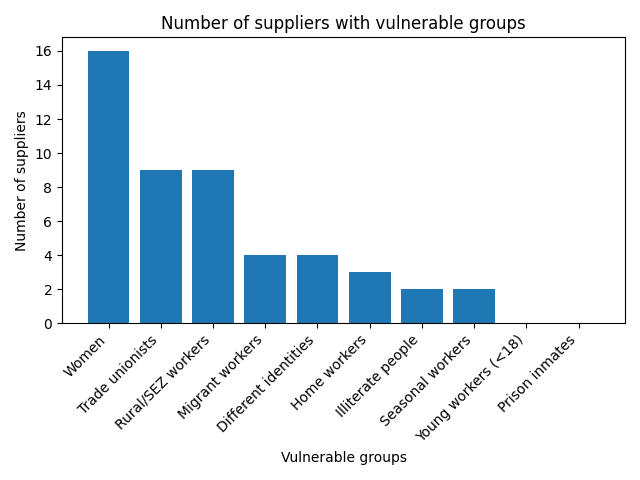
Based on an analysis of our supplier base, we have mapped which vulnerable groups are represented in our value chain. The analysis shows that women are by far the most prominent group. This reflects a general structure in the textile industry, where many production tasks are carried out by women. At the same time, women may be particularly vulnerable in relation to wages, occupational health and safety, and the risk of discrimination.
In addition, we see a clear presence of workers in rural areas and special economic zones, where access to rights and public authorities may be limited. Employees who are active in trade unions or involved in worker representation also constitute an important group. They play a key role in securing rights, but may also be exposed to pressure or restrictions.
To a lesser extent, migrant workers, home-based workers, and individuals with diverse identities or sexual orientations are also present. What these groups have in common is that they may face greater challenges in asserting their rights and therefore require special attention.
An important outcome of the analysis is that we have not identified any workers under the age of 18 within our direct supplier base, indicating a low risk of child labour in our current setup.
Needs and risks in practice
Although the groups differ, there are several common needs that cut across the value chain. These include fair wages, safe and healthy working conditions, access to grievance mechanisms, and respect for freedom of association. In addition, protection against discrimination and harassment is a key issue – particularly for women and individuals belonging to minority groups.
For some groups, such as migrant workers, there may also be a need for greater transparency in employment conditions, access to information in their own language, and secure working environments free from dependency relationships. For workers in rural areas, the challenges are often more structural and related to limited access to knowledge and rights.
Understanding these differences is essential in order to work in a targeted way with improvements rather than relying on general measures.

How we work to protect vulnerable groups
At Nybo Workwear, we take a structured and risk-based approach to working with our suppliers to ensure responsible conditions throughout the value chain. All suppliers are required to comply with our Code of Conduct, which is based on international standards for human and labour rights. This includes clear requirements on, among other things, the prohibition of discrimination, the right to freedom of association, and safe working conditions.
We also collaborate with suppliers that are covered by recognized certifications such as amfori BSCI, SA8000, and OEKO-TEX® STeP. These standards ensure a systematic approach to social responsibility and contribute to transparency in the value chain. Through CSR questionnaires, audits, and ongoing dialogue, we gain insight into actual conditions and are able to follow up on specific risks.
We also ensure that workers in the value chain have access to a whistleblower system, allowing them to report unacceptable conditions anonymously. This is particularly important for vulnerable groups, who may otherwise have limited opportunities to be heard.
At the same time, we actively work on collaboration and development together with our suppliers. We view improvements as a shared process, where dialogue and long-term commitment are essential to creating real change – especially for the most vulnerable groups.
Mapping vulnerable groups provides us with a stronger foundation to prioritize our efforts and address risks in a more targeted way. For us, this is not only about meeting requirements, but about taking responsibility for the people who are part of our value chain.